About MBG
The Free Nutritious Meal Program (Makan Bergizi Gratis / MBG) is one of Indonesia’s flagship social policies introduced under the Prabowo–Gibran administration to improve children’s health, nutrition, and learning outcomes. The program aims to provide free, balanced meals for students in public schools and Islamic boarding schools (pesantren) across the country. Beyond its immediate goal of reducing hunger and malnutrition among children, MBG also seeks to stimulate local economies by sourcing ingredients from nearby farmers, fishers, and small food producers—creating a sustainable food supply chain that benefits both education and rural livelihoods.
In its early implementation phase, MBG has been rolled out in selected pilot regions to test delivery systems, coordination mechanisms, and food safety standards. The government works with local authorities, schools, and community organizations to ensure the meals meet nutritional requirements and are distributed equitably. However, the program has also faced operational challenges, including food safety incidents, logistical inefficiencies, and limited oversight in some areas—highlighting the need for stronger local monitoring and transparent reporting mechanisms.
Despite these challenges, the MBG program represents an important step toward realizing Indonesia’s constitutional goal of social justice and human development. By integrating nutrition, education, and local economic empowerment, MBG has the potential to become a cornerstone of inclusive welfare policy—nurturing a healthier, smarter, and more productive generation while reinforcing community resilience at the grassroots level.
About Map
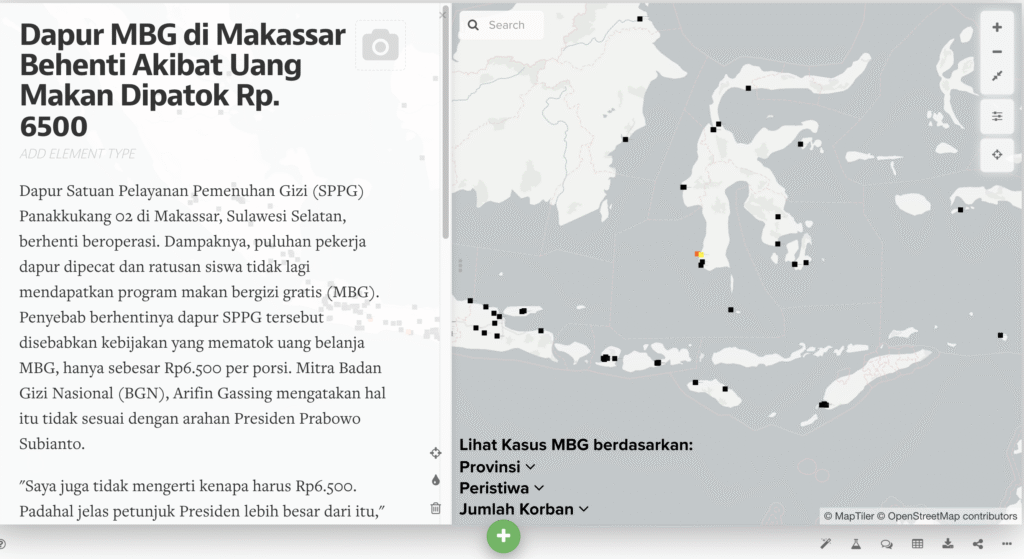
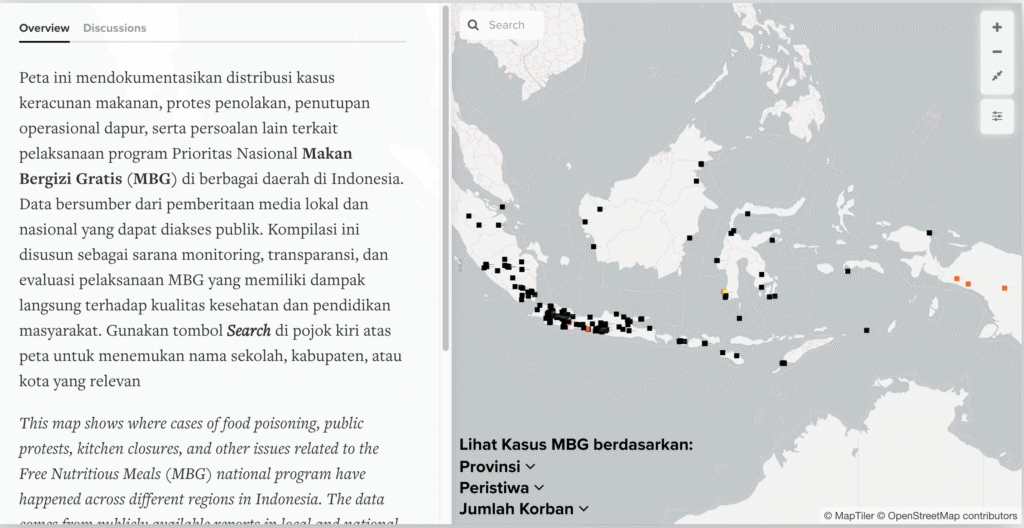
The MBG Monitoring Map is an interactive database designed to track and visualize various incidents related to the implementation of Indonesia’s Free Nutritious Meal Program (Makan Bergizi Gratis / MBG). It compiles publicly accessible reports from national and local media, documenting cases such as food poisoning, protests, supply delays, and operational shutdowns of school kitchens across different provinces. By consolidating this information into one accessible platform, the map provides a transparent, real-time overview of how the program is being carried out nationwide.
Beyond merely documenting problems, the MBG Monitoring Map serves as a vital tool for accountability, transparency, and learning. It allows policymakers, journalists, researchers, and the public to identify trends, locate high-risk areas, and evaluate the consistency of program delivery. Users can search by school, district, or city to explore specific events and assess the frequency or severity of reported issues.
Ultimately, this database aims to strengthen the program’s governance and improve public trust. By making data-driven insights visible and accessible, it encourages better coordination among stakeholders—government agencies, schools, parents, and local suppliers—while ensuring that the MBG program truly achieves its goal: providing safe, nutritious meals that support children’s health and education across Indonesia.
🗓️ First Released: October 5, 2025
🛠️ Last Updated: October 5, 2025
💡 Have updates on MBG? Share with us!
📩 Email: indobignetwork@gmail.com
🔗 MBG Interactive Map